Pages

Wednesday, October 14, 2020

Homemade Tapioca Pudding


Tapioca pudding is one of those things that is NORMALLY gluten-free. Unfortunately, 2020 seems to have attacked minute tapioca along with toilet paper. There is NONE to be found. I have checked ALL of the stores, and online, and all of the places… There just is not any minute tapioca. So what is a mom of eight kids who all love tapioca pudding to do? 


Fortunately, there are still tapioca pearls available. Unfortunately, I have never actually made tapioca pudding with anything but Kraft minute tapioca. So I’ve had a little bit of a learning curve. The bag of small tapioca pearls I bought at a local Asian Foods market had no cooking instructions, so I had to search the internet for vague instructions. The first recipe I followed was not a success. It had me soak the tapioca in hot water for half an hour, but the proportions were not right and my soaked tapioca pearls formed a solid sheet across the bottom of my pan that took FOREVER to break up into smaller pieces again. The cooking process (post-soaking) also seemed to take forever. It was probably really only a few minutes more than the “minute” version, but it SEEMED longer because I had to take the pudding off the heat and temper the eggs before adding them back in ... lazy, I know, but it just felt like a lot of effort. And then, once the pudding was finished, my children objected to the flavor (“It just tastes like regular vanilla pudding!”) and the amount of tapioca pearls (“There’s so much tapioca...it’s stiff!”). 

So today I went back to the drawing board. I kept the pre-soaking step, but increased the water. Then I looked up the instructions for Krafts’ minute tapioca and based my recipe on their instructions. The recipe was simpler and faster, and my children agree the resultant pudding is “Much Better!” So, no matter what else 2020 takes from you, don’t let it take your tapioca pudding! 


Tapioca Pudding with Small Pearl Tapioca

1/3 c. small pearl tapioca
2/3 c. hot water
5 1/2 c. whole milk
2/3 c. sugar
Two eggs, beaten
Dash salt
1 to 2 teaspoons vanilla

In a large sauce pan, combine small pearl tapioca and hot water. Swirl around a bit to allow the tapioca to spread evenly across the bottom of the pan. Let sit for half an hour. After half an hour has passed, gently stir the tapioca to make sure it has not formed any large clumps. There will still be a little bit of water in the bottom of the pan. Do not remove the excess water. 

Add milk, sugar, salt, and beaten egg to the tapioca. Whisk well. Let sit for five minutes.

Heat the pudding mixture over medium heat, stirring constantly, until it comes to a full rolling boil. Remove from heat and stir in vanilla. Allow pudding to sit and cool for 20 minutes. Pudding will continue to thicken as it cools. (If desired, cover the pudding with plastic wrap to prevent it from forming a skin. I usually just give it a quick stir every few minutes instead.) 

If, for some reason, your pudding is not thickening after it has been cooling for ten minutes, return it to medium heat and bring it back to a boil, then allow it to cool. This should fix it. 

Serve warm or cold. Makes about ten 1/2 c servings. (If you want to cut the recipe in half, use 3 Tbs. tapioca pearls and 6 Tbs. hot water.) 


Thursday, October 1, 2020

Gluten Free Tomato Soup for Casseroles


 Tomato soup is one of those things I never eat on its own but which I use all the time anyway. Because so many casseroles call for tomato soup, this is one of those items that most people really miss after going gluten free. (Well, maybe not “most people”, but as a busy mother with a lot of children, I sure missed being able to buy it.) 

The good news is, tomato soup is really easy to make. Really easy. If you just adore sitting down with a hot bowl of tomato soup, this may not be exactly what you are looking for.  It is, instead, a thicker, casserole ready, almost condensed soup...so Shepherd’s Pie gets to stay on your menu :)


Tomato Soup

1/4 cup butter

1/4 cup EGF all purpose flour mix

1 tsp beef bouillon

1 (15 ounce) can tomato sauce

1 c milk 

Salt and pepper to taste

Basil leaves, oregano, and dill weed to taste


Combine butter and flour mix in a medium sauce pan. Add bouillon and spices. Heat over medium high heat until melted and well combined, whisking constantly. Add milk and tomato sauce. Cook and stir until thickened and bubbling. Use in your favorite casserole. (Makes about 2 cans-worth of tomato soup.) 

(In the picture above, I’ve combine a recipe of this tomato soup with 2 c cooked hamburger, and I’m about to top it with green beans, mashed potatoes, and cheese, a favorite busy-fall-day dinner at our house.) 

Tuesday, September 29, 2020

Gluten Free Snickerdoodles


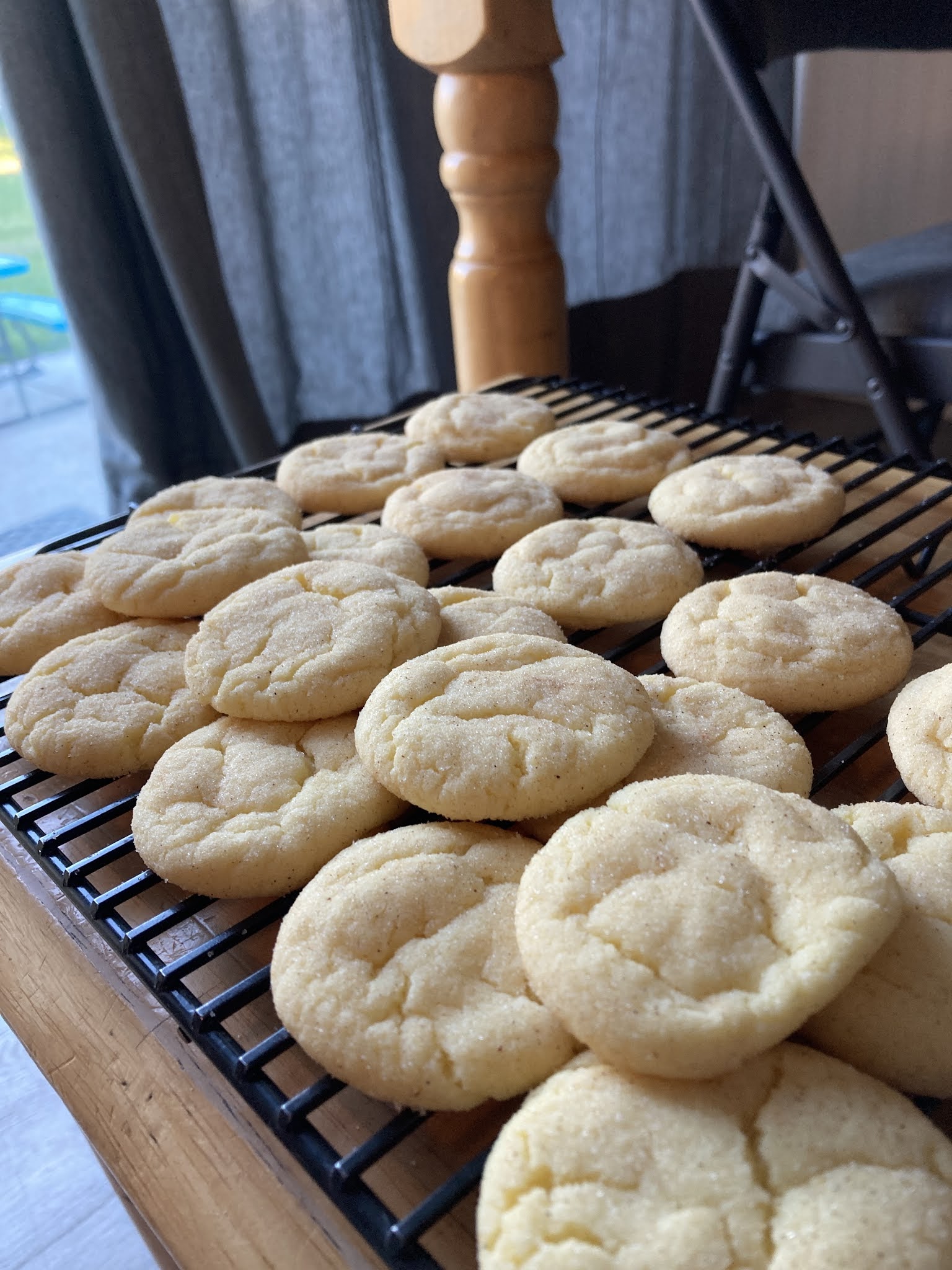
To be completely honest with you, I don’t really care for snickerdoodles. My husband really likes them, so I developed a recipe several years ago…but I really haven’t made it more than a couple of times since then. Today one of my twins decided that she would make snickerdoodles for one of her church youth leaders who had to have surgery. Other than asking me “How do you know when it’s creamed?”, she made them all by herself. So far I’ve eaten two, and I may eat a third. Maybe I have COVID and my sense of taste has gone, but they just taste so GOOD. And the little boy whose hand is in the next picture? I think he’s eaten five. We may have to make a second batch. 


Gluten Free Snickerdoodles

1 c. butter flavored shortening
1 c. sugar
1 (3.4 ounce) package instant vanilla pudding mix
2 eggs
1 1/3 tsp. xanthan gum
1 tsp. baking soda
1/4 tsp. salt
2 tsp. cream of tartar
Cinnamon sugar for rolling**

Preheat oven to 350°.

Cream shortening, sugar, and dry pudding mix. Add eggs and mix well. Combine dry ingredients, then mix them into the creamed mixture.

Rolled into 1 inch balls. Roll balls in cinnamon sugar. Place 2 inches apart on an ungreased cookie sheet. (Or, if you like, place them on a cookie sheet lined with parchment paper.)

Bake 10 to 11 minutes. (Bottom edges will be a light golden brown. Cookies will be puffed up a little bit, but not completely firm to the touch. They should fall a little bit after they come out of the oven.)

**To make cinnamon sugar, combine 1 c. white sugar with 1 tsp. cinnamon and mix well. Or, if you like your cinnamon flavor a little bit stronger, add two or even 3 teaspoons cinnamon per cup of sugar.


Sunday, June 14, 2020

Lemonade Sheet Cake


Doesn’t this look like the perfect summertime dessert? 

It appears I am not done with my sheet cake variations. I asked my two year old what kind of cake he wanted for dessert tonight and he replied “Lemon!”  When asked what kind of frosting he wanted, the answer was “Pink!” So I took my Vanilla sheet cake recipe and turned it into a Pink Lemonade cake. I am especially proud of the frosting, which definitely tastes more “lemonade” than “lemon” to me. It’s not earth-shakingly new, but it is another successfully yummy variation on my gluten free sheet cake theme :)


Lemonade Sheet Cake

2 c. EGF all-purpose flour
2 c. sugar
1 tsp. xanthan gum
1 tsp. baking soda
1 tsp. lemon peel (I used dried peel because that’s what I had)
1/2 tsp. salt
1 c. butter (2 sticks)
1 c. water
1/2 c. buttermilk (I use 1/2 c. whole milk plus about 2 tsp. lemon juice)
2-4 Tbs lemon juice (I used about 2 Tbs, but think I will add more next time)
3 eggs
1 tsp. vanilla

In a large bowl, combine flour mix, sugar, xanthan gum, baking soda, salt, and lemon peel. In a medium pan, combine butter and water. Bring to a boil over medium high heat, stirring occasionally. Pour butter mixture into flour mixture and mix well until smooth. Add buttermilk, lemon juice, eggs, and vanilla and mix thoroughly. The batter will be quite thin.

Pour batter into a greased (or well-sprayed-with-Pam) 13x18 sheet cake pan. Bake at 400 degrees for 20-25 minutes. (The edges of the cake will pull away from the pan when the cake is done.) Remove from the oven and, while hot, top with the following frosting:

Lemonade Frosting

1/2 c. butter (1 stick)
5 c. powdered sugar (about 1 1/3 lb.)
3 Tbs sugar
3 Tbs lemon juice
3 Tbs. milk
1 tsp. vanilla

Combine sugar and lemon juice and stir well. Let sit (stirring occasionally) until sugar is fully dissolved. Once it is fully dissolved, pour 4 Tbs of the lemon juice mixture into a measuring cup (this is almost all of the juice).

Melt butter in a medium saucepan over medium-low heat, stirring continually, until butter is a very light brown color and aromatic. (If you burn the butter, don't use it. Throw it out and start again.)Turn heat down to low. Add powdered sugar to butter a cup or so at a time, stirring until well incorporated each time and adding sweetened lemon juice and then milk as necessary to keep the mixture mixable (about a tablespoon or two per cup of powdered sugar added). Remove from heat and add any remaining milk and the vanilla. (If you, like my two year old, want pink frosting, add food coloring here.) Mix well with a hand mixer or stand mixer until smooth (or, if the frosting is already very smooth (sifting the powdered sugar ahead of time will help with this), skip the mixer.

Pour immediately over warm cake (frosting will firm up quickly and spreads best while still hot).


Sunday, May 24, 2020

Gluten Free Yellow Cake


I’ve been on a cake making kick, evidently. A couple of weeks ago I decided to revamp the yellow cake recipe I’ve been using for a while. I’ve actually been a little disenchanted with it, even though I invented it myself. Recently it’s just seemed too…heavy. And the texture hasn’t been quite right. So I compared that recipe with the Vanilla Texas sheet cake that I’ve been making, and ended up with this recipe. Well, actually I ended up with a recipe that didn’t work quite as well as I wanted. So THIS time I decreased the buttermilk and it turned out beautifully. It’s not quite as tall as I’d like it to be, but that could probably be fixed by making a 1.5 times recipe and then baking it a little longer. I’ll let you know how it turns out after I try it :)

Gluten Free Yellow Cake

3/4 c. butter, softened
1.5 c. sugar
3 eggs
2 c. EGF all-purpose flour
1 tsp. xanthan gum
2 tsp. baking powder
1/2 tsp. salt
1 c. buttermilk (I use just under 1 c. whole milk plus about 2-3 tsp. lemon juice; don’t go crazy, though, or you’ll end up with a lemon cake)
1 tsp. vanilla

Preheat oven to 375°. Prepare a 9 x 13 pan (either by spraying it with nonstick cooking spray or by lining it with parchment paper).

Combine butter and sugar in a stand mixer. Beat on medium to high speed until light and fluffy. Add eggs and mix well. Combine dry ingredients in a separate bowl. Combine buttermilk and vanilla. Alternately add flour mixture and buttermilk to the creamed butter mixture, starting and ending with flour and mixing on low to medium speed after each addition until well incorporated. (Don’t go too overboard on the mixing, though. Because we are working with gluten free flours, the cake won’t get tough, but if you incorporated too much air into the cake batter the lack of gluten means the flour has a harder time keeping its structure around the air bubbles and then you’re more likely to get a collapsed cake. And NOBODY wants one of those.)

Pour batter into the prepared pan. Place in the preheated oven and bake for about 35 minutes (maybe a little less, maybe a little more). The cake will be pulling away from the edges of the pan and the top will spring back when gently touched. (Also a toothpick inserted in the center will come out clean. You know the drill.) Remove from oven and cool completely before frosting.


Before frosting - can you tell how the edges have pulled inward a bit? 

I frosted mine with a recipe of Lemon Buttercream Frosting that I found on Sally’s Baking Addiction. I did add  an extra couple of tablespoons of fresh lemon juice because the lemon flavor wasn’t quite strong enough for my taste. Altogether the cake was just delightful - the taste and texture were just like a homemade cake made with regular flour - and super easy to make. I’m excited to try it as the cake part of my Peach Right Side Up Cake, too!

The color is not quite right on this picture as it was taken inside, but you can see how cleanly it cut and how beautiful the texture was. 


Sunday, May 17, 2020

Peanut Butter Sheet Cake


So, it turns out I really like these sheet cakes. I’ve done chocolate, vanilla, and caramel sheet cakes, and today I decided to try a peanut butter version. I’m not sure what it is that helps these particular gluten free cakes to be so soft and light (I suspect the boiling water), but they’ve just been delicious. This peanut butter cake was no exception. Everyone liked it, even my daughter’s college roommate who, as a general rule, doesn’t like peanut butter things. Give it a try and tell me what you think!

Peanut Butter Texas Sheet Cake

2 c. EGF all-purpose flour
2 c. sugar
1 tsp. xanthan gum
1 tsp. baking soda
1/2 tsp. salt
1/2 c. butter (1 stick)
1/2 c. creamy peanut butter
1 Tbs oil
1 c. water
1/2 c. buttermilk (I use 1/2 c. whole milk plus about 1.5 tsp. lemon juice)
3 eggs
1 tsp. vanilla

In a large bowl, combine flour mix, sugar, xanthan gum, baking soda, and salt. In a medium pan, combine butter, peanut butter, oil, and water. Bring to a boil over medium high heat, stirring regularly. (Don’t worry if the peanut butter mixture starts to look separated - it will all mix in well in the end). Pour peanut butter mixture into flour mixture and mix well until smooth. Add buttermilk, eggs, and vanilla and mix thoroughly. The batter will be thin.

Pour batter into a greased (or well-sprayed-with-Pam or parchment-paper-lined) 13x18 sheet cake pan. Bake at 400 degrees for 20-25 minutes. (The edges of the cake will start to pull away from the pan when the cake is done, and the center of the cake will bounce back if gently touched (don’t burn yourself!).) Remove from the oven and, while hot, top with the following frosting:

Peanut Butter Frosting

1/2 c. butter (1 stick)
1/2 c. peanut butter (creamy or crunchy)
3 1/3 c. powdered sugar (just under 1 lb.)
6-7 Tbs. milk
1 tsp. vanilla

Place powdered sugar in the bow of a stand mixer. Combine butter, peanut butter, and milk in a medium saucepan over medium-high heat, stirring continually, until mixture starts boiling.  (Again, don’t worry if the mixture separates some.) Turn the mixer on low and slowly pour the hot peanut butter mixture into the powdered sugar while the mixer is running.  Mix on medium speed until the powdered sugar is well-incorporated and the icing is smooth, then add the vanilla.

Pour immediately over warm cake and gently spread. (Frosting will firm up quickly and spreads best while still hot.)


Saturday, April 21, 2018

Vanilla Texas Sheet Cake


So, after I made three or four chocolate sheet cakes in a row I suddenly began to wonder if there was a vanilla version of the Texas Sheet Cake, and (if so) if it would translate well to gluten free.  I was a little hesitant to try it because I had the idea in my head that chocolate cakes always transition to GF better than vanilla ones.  But I had a free afternoon, so I tried it. I found a recipe here and modified it to be a little closer to my original chocolate version. So far I've made it twice, and it's been a big hit each time, with people fighting over the last piece :)

Vanilla Texas Sheet Cake

2 c. EGF all-purpose flour
2 c. sugar
1 tsp. xanthan gum
1 tsp. baking soda
1/2 tsp. salt
1 c. butter (2 sticks)
1 c. water
1/2 c. buttermilk (I use 1/2 c. whole milk plus about 1.5 tsp. lemon juice)
3 eggs
1 tsp. vanilla

In a large bowl, combine flour mix, sugar, xanthan gum, baking soda, and salt. In a medium pan, combine butter and water. Bring to a boil over medium high heat, stirring occasionally. Pour butter mixture into flour mixture and mix well until smooth. Add buttermilk, eggs, and vanilla and mix thoroughly. The batter will be quite thin.

Pour batter into a greased (or well-sprayed-with-Pam) 13x18 sheet cake pan. Bake at 400 degrees for 20-25 minutes. (The edges of the cake will pull away from the pan when the cake is done.) Remove from the oven and, while hot, top with the following frosting:

Browned Butter Frosting

1/2 c. butter (1 stick)
5 c. powdered sugar (about 1 1/3 lb.)
6 Tbs. milk
1 tsp. vanilla

Melt butter in a medium saucepan over medium-low heat, stirring continually, until butter is a light brown color and aromatic. (If you burn the butter, don't use it. Throw it out and start again.) Add powdered sugar a cup or so at a time, stirring until well incorporated each time and adding milk as necessary to keep the mixture mixable. Remove from heat and add any remaining milk and the vanilla. Mix well with a hand mixer or stand mixer until smooth.

Pour immediately over hot cake (frosting will firm up quickly and spreads best while still hot).